It’s now inevitable that the AI ecosystem will end up open at every layer. For users, this is the best-case scenario: more innovation, more privacy, and more freedom. It also changes how the business world works: where value accrues, how companies compete in a market where the best product actually wins, and what builders should be building toward.
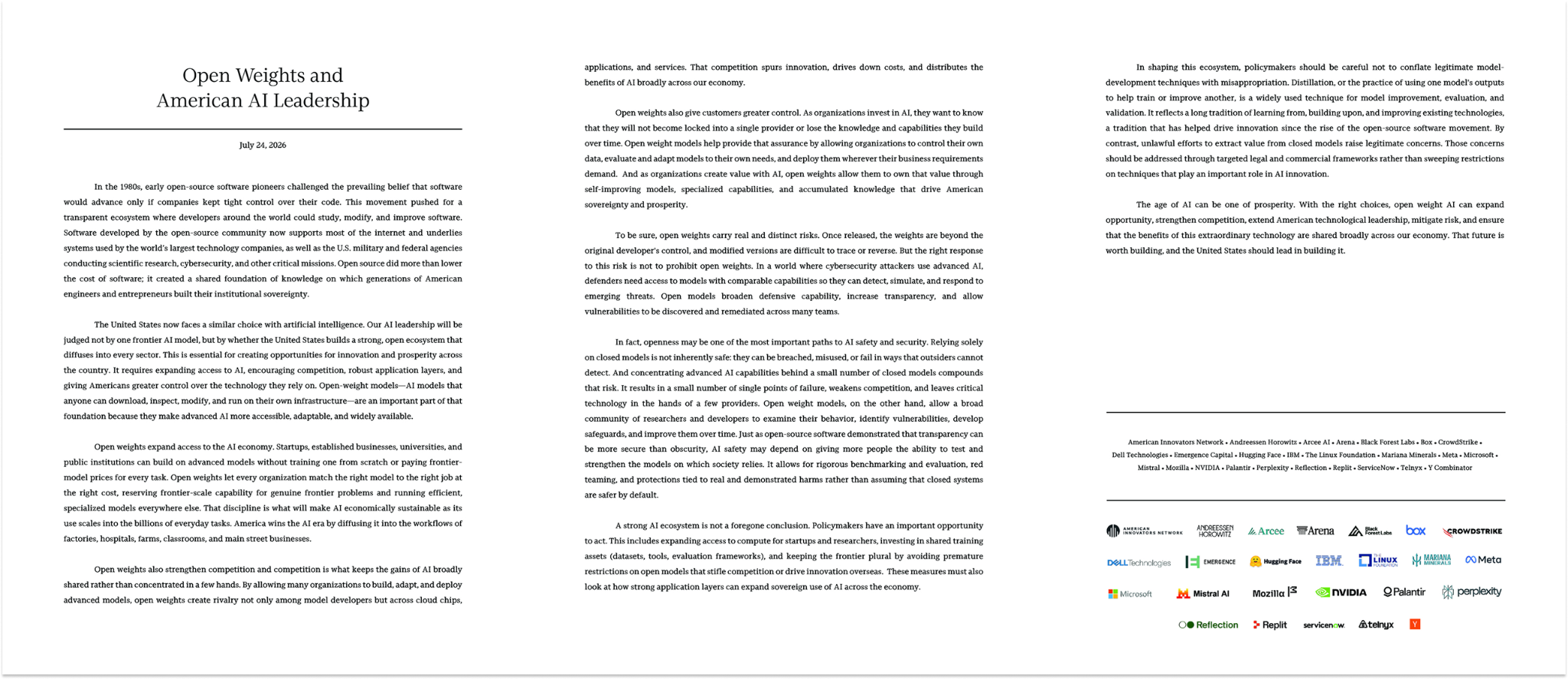
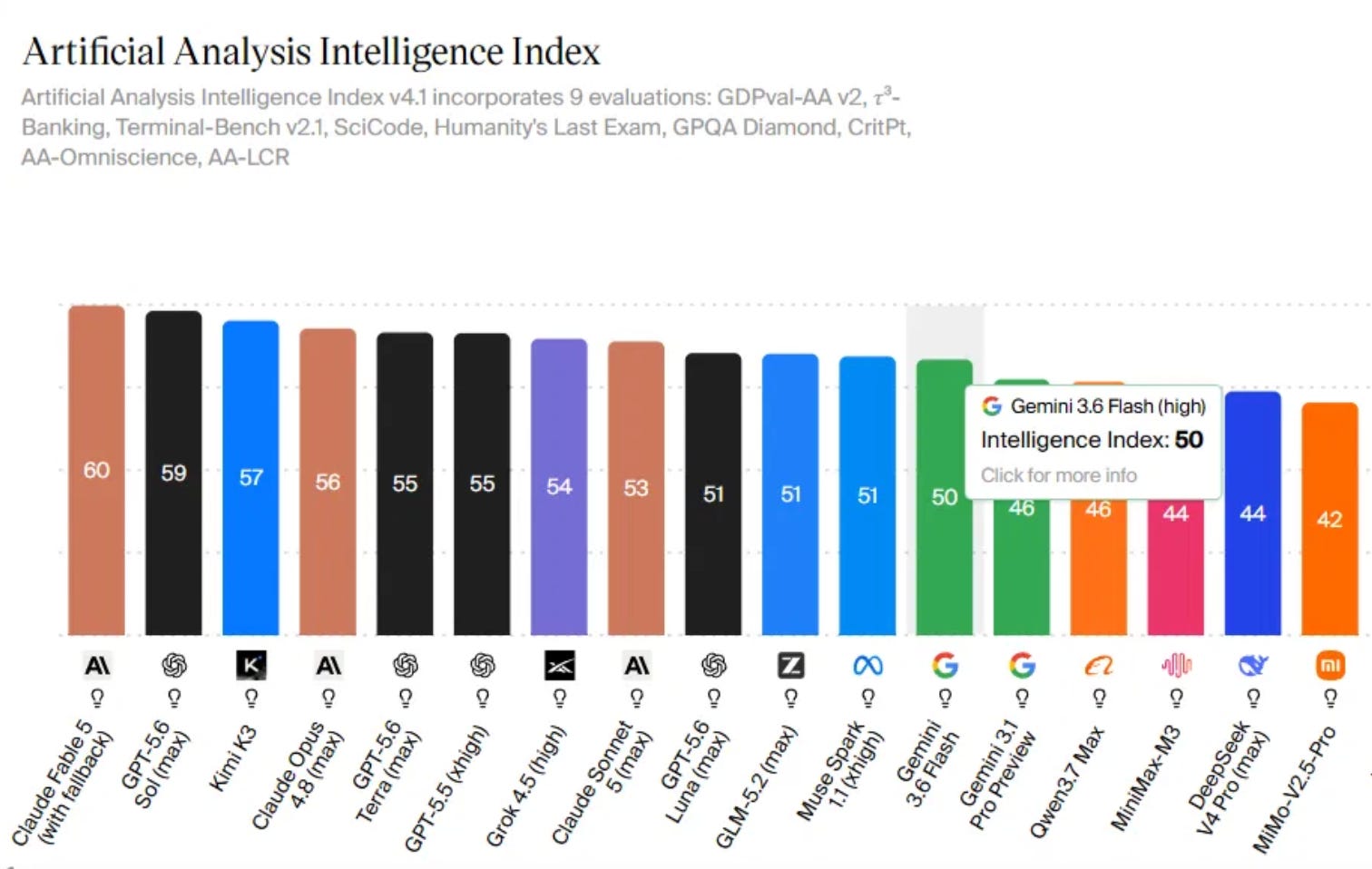
On the value accrual side, raw intelligence will probably end up a commodity that’ll keep getting better and cheaper as time goes on. Inside the AI industry, most value will sit in hardware (GPUs, memory, etc.), in serving that intelligence to users (inference, cloud infrastructure, routing), and probably specialized models trained on proprietary data.
The other two: how companies compete and what builders should optimize for, are even more important. And both come from the way an open ecosystem actually works. This specific ecosystem is defined by four main attributes:
-
Open weights models: Anyone can run them privately and uncensored, and can also fine-tune them. They may not always run on a laptop, but any company can host them, adapt them to their own values (private, uncensored, custom rules), and sell inference. This makes models easily swappable depending on the specific need.
-
Open source harness: Harnesses of all types (Codex, Grok Build, Hermes, Open Code, etc.) are already open source. Anyone can build on them without fear of access being revoked. In this scenario, closing your code only makes your product less composable and worse.
-
Uncensored agents: Because they run on open models and harnesses, there are no gatekeepers on what an agent is allowed to do or say. Not just which tools it can use, but access to the internet, the computer, private keys, or anything else the user wants. Agents are free to choose whatever is actually best.
-
MD files: Memory and context live in the most primitive possible format. This makes switching products as easy as copy-pasting a file.
The combination of these attributes creates a fairer, more meritocratic version of what we saw in recent years with the web2 and social media era. It comes down to two main advantages:
Ability to switch: Infrastructure being open and the valuable stuff for users being MD files that they can copy-paste anywhere gives users the ability to switch and swap services in an instant. This forces companies to behave well as they can’t abuse their power if the user can just turn around and move to a competitor.
No king-making by leading companies: In an open tool, integration is permissionless. Leading companies can’t king-make by letting some companies integrate with them and not letting others do the same, or by revoking access to anyone building something they want for themselves. Builders can build on top of products knowing they won’t lose access in the future, which keeps the ecosystem composable.
The opposite is true for social platforms. Those companies own user data and audiences. They have strong network effects: a social product with ten users is useless, but with a billion it becomes valuable because everyone you know is there. Those network effects created long-term moats and gave them enormous power once they reached scale.
AI is different. It’s a tool, not a network. Your experience with an agent does not depend on everyone else using the same one. You can use GPT on Monday and Kimi on Tuesday without losing anything of value. The inability to create network effects is what will make the AI ecosystem look similar to the early internet or crypto: open, decentralized and competitive on product merit alone.
The companies that treat AI as core infrastructure, and the builders who lean into openness instead of fighting it, will pull ahead of walled-garden approaches and slower incumbents. Look at how even Facebook and Google, despite billions invested, have struggled to compete with new and faster challengers.
And just like the open internet, the AI ecosystem will start skeuomorphic (a term Apple made famous in the 2000s, for when a new technology imitates the form of whatever came before), like how early newspaper websites looked like printed papers and updated content just once a week. AI is doing the same thing right now by trying to replace one human customer service agent for one bot doing the exact same job.
Over time it will go native and unlock new use cases that were hard to imagine beforehand. Amazon’s everything store with reviews and personalized recommendations was unthinkable in the pre-internet world. The native use cases for AI are still coming, and the biggest ones are probably things we can’t name yet.
Even if we don’t know exactly which new industries and native use cases it will unlock, we already know one thing for certain: it’s going to be open. And that should already change the way business owners think and act about what they’re building:
-
Build products that enable model swapping from day one. Never depend on a single model staying the best.
-
Make it easy for anyone to integrate with your product: treat the ecosystem like lego bricks, the more composable your product is, the faster it improves.
-
Invest in branding: It is still underestimated in tech, but becomes extremely important in high-competition environments.
-
Be the first: When everyone can build quickly, being first to a strong idea matters a lot.
-
Market to agents: Uncensored agents will have the freedom to choose which tools they use, so be discoverable where agents look for tools.
-
Build tools that uncensored agents will prefer: for example, a censored agent might be pushed toward a credit card because of a partnership, an uncensored agent will often choose crypto to save fees and time.
-
Play long-term games: when switching is so easy, short-term hacks will not hold, you’ll have to keep improving the product to retain your users.
An open ecosystem doesn’t kill competition, it just makes it honest. When users and agents can leave in a second, the only moat left is being better. The best, most composable product wins. And that’s how you actually get better and cheaper products for everyone.